What a multivitamin is designed for
A multivitamin is insurance for common gaps across the whole body: B vitamins, vitamin D, iron and so on. It isn’t designed around the eyes, and the amounts of eye carotenoids, when present, are often small.
What Visivra adds
| Nutrient | Typical basic multi | Visivra |
|---|---|---|
| Lutein + zeaxanthin | Often low or none | Yes |
| Bilberry extract | Rarely | Yes |
| Astaxanthin | Rarely | Yes |
| Zinc | Usually | Yes |
| Vitamin A | Usually | Yes |
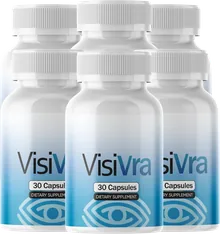
Best Visivra price today: 6 bottles at $49 each (save $780) or 3 bottles at $69 each with free US shipping. One-time payment, no autoship, 60 days to decide.
Check Today’s Discount ›Taking both safely
Add up the vitamin A and zinc from every product you take. NIH sets the adult upper limit at 3,000 mcg a day of preformed vitamin A and 40 mg a day of zinc (NIH ODS; NIH ODS). Beta-carotene counts differently from preformed vitamin A. A pharmacist can check your labels in two minutes. See how much zinc for eye health.
Who benefits from an eye formula
People who spend long hours on screens, adults over 40, night drivers and anyone who rarely eats leafy greens. If that sounds like you, a multivitamin alone probably isn’t covering your eyes. Read best eye vitamins for computer users.
How to read your multivitamin label for eye nutrients
Grab your multivitamin and look for these lines on the Supplement Facts panel:
- Vitamin A: check whether it is listed as retinyl palmitate/acetate (preformed) or beta-carotene. Preformed vitamin A counts toward the 3,000 mcg upper limit; beta-carotene from supplements is handled differently (NIH ODS).
- Zinc: note the milligrams. Adults need 8–11 mg a day and shouldn’t exceed 40 mg from all sources without medical advice (NIH ODS).
- Lutein and zeaxanthin: some multis list them, often in small amounts compared with the 10 mg + 2 mg used in AREDS2 (PubMed).
- Bilberry, astaxanthin: rarely present in a standard multi.
Example stacking check
| Source | Zinc | Preformed vitamin A |
|---|---|---|
| Typical multivitamin | Check label (often 8–15 mg) | Check label |
| Visivra | Check bottle | Check bottle |
| Food (average diet) | Roughly meets needs for many adults | Varies widely |
| NIH upper limit (adults) | 40 mg | 3,000 mcg RAE |
For most people a multivitamin plus Visivra stays well within limits, but checking takes two minutes and removes any doubt.
When a multivitamin alone is enough
If you eat leafy greens most days, have no screen-related eye complaints, see well at night and your eye doctor has no concerns, a good diet and a basic multi may be all you need. The NIH Office of Dietary Supplements reminds people that supplements can’t take the place of a varied diet (NIH ODS).
When an eye formula adds real value
- You spend six or more hours a day on screens and your eyes feel it.
- You rarely eat dark leafy greens (foods high in lutein).
- You are over 40 and want to support your macula long term (macular pigment).
- Night driving or dim rooms have become harder.
Timing both supplements
Take them together with your main meal if you like; there is no known reason to separate them. If one upsets your stomach, take the multi at breakfast and Visivra at lunch or dinner, always with food. See when to take Visivra.
Reader questions about stacking
My multivitamin says “eye health” on the front. Do I still need Visivra?
Check the label. Look for lutein and zeaxanthin amounts close to those used in research (PubMed) and for bilberry or astaxanthin. If they are missing or very low, an eye formula fills the gap.
Can I take Visivra on days I forget my multi?
Yes. They are independent. Just keep the overall daily totals of vitamin A and zinc in mind.
Which should I prioritise if I can only afford one?
It depends on your goal. For general nutrition gaps, a multivitamin. For eye comfort and macular support, an eye formula. If you eat a varied diet and your main concern is your eyes, many people choose the eye formula.
Are gummies as good as capsules?
Gummy multivitamins often contain fewer nutrients and added sugar. Visivra is a capsule.
The bottom line
A multivitamin and an eye formula are complementary rather than competing. The multivitamin covers broad gaps; the eye formula concentrates on the nutrients your macula and retina use most. Check the vitamin A and zinc totals, take both with food, and you get the benefits of each.
Reader question: which one first?
If you’re starting both, begin with one for two weeks, then add the other, so you can tell how each feels.
One more reader question
Can I just take two multivitamins to get more eye nutrients?
No. Doubling a multivitamin doubles everything in it, including vitamin A, iron and zinc, and can push you past safe limits (NIH ODS; NIH ODS). It still wouldn’t give you much lutein, zeaxanthin, bilberry or astaxanthin. If your goal is eye support, a targeted eye formula alongside one daily multivitamin is the safer approach. Check both labels and keep your totals within NIH upper limits.
Bottom line
Keep your multi if you like it, and let Visivra handle the eye-specific nutrients. See Visivra packages.
FAQ
Can I take Visivra with my multivitamin?
Usually yes. Add up vitamin A and zinc from both labels and stay within NIH upper limits.
Does a multivitamin help eye strain?
Most multis aren’t designed for the eyes and contain little or no lutein, zeaxanthin, bilberry or astaxanthin.
Should I replace my multivitamin with Visivra?
No. Visivra is an eye formula, not a complete multivitamin.
Sources
- NIH Office of Dietary Supplements: Vitamin A and carotenoids
- NIH Office of Dietary Supplements: Zinc
- PubMed: Lutein + zeaxanthin and omega-3 fatty acids for AMD, the AREDS2 randomized trial (JAMA, 2013)
- NIH Office of Dietary Supplements: Dietary supplements, what you need to know
General information, not medical advice. Prices and product details come from the official Visivra order page and bottle, checked November 6, 2026; the checkout page and the label on your bottle take priority. Read our disclaimer.