How the FDA treats supplements
Under U.S. law, dietary supplements are regulated more like food than drugs. Makers are responsible for making sure their products are safe and correctly labeled, but the FDA does not review or approve them before they go on sale (FDA). After a product is on the market, the FDA can act against unsafe products or false claims, and consumers can report problems through MedWatch.
What the badges on supplement pages mean
| Badge or phrase | What it actually means | Is it misleading? |
|---|---|---|
| “Made in an FDA-registered facility” | The factory is registered with the FDA, as food facilities must be | No, if worded exactly like this |
| “GMP certified” | Made under Good Manufacturing Practice rules for quality and cleanliness | No; it is about process, not results |
| “FDA approved” | Not possible for a supplement | Yes |
| “Clinically proven to restore vision” | No finished eye supplement has proven this | Yes |
| “These statements have not been evaluated by the FDA” | The required disclaimer for structure/function claims | No, it’s honest |
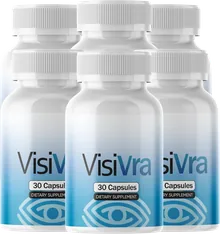
Best Visivra price today: 6 bottles at $49 each (save $780) or 3 bottles at $69 each with free US shipping. One-time payment, no autoship, 60 days to decide.
Check Today’s Discount ›What this means for Visivra
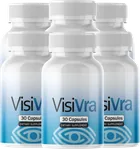
Visivra’s official page uses the standard FDA disclaimer and describes the product as a dietary supplement that supports eye health. That is the correct, legal way to sell it. Badges about the facility or GMP describe how it’s made. If you see an ad or third-party page claiming Visivra is “FDA approved” or “FDA cleared,” that page is misinforming you, and you should buy elsewhere; see Visivra scams and red flags.
What evidence does Visivra have, then?
There’s no published clinical trial of the finished Visivra capsule. Its ingredients, however, have their own human research:
- Lutein and zeaxanthin were tested by the NIH in AREDS2, a large randomized trial (NEI; JAMA).
- Lutein and zeaxanthin improved visual performance and eased strain in heavy screen users (PubMed).
- Bilberry was tested for 12 weeks in screen workers (PubMed).
- An anthocyanin, astaxanthin and lutein combination improved eye-function scores versus placebo (PubMed).
That is ingredient-level evidence, which is the norm for supplements. For the full picture see eye supplements that actually work and does Visivra work?.
Are any eye products FDA approved?
Yes, but they are drugs or devices, not supplements: prescription eye drops for glaucoma, injections for wet macular degeneration, and some lenses. These treat diagnosed diseases and need a prescription. A supplement like Visivra sits in a different category: daily nutrition support alongside regular eye exams (NEI). If you have a diagnosed condition, your eye doctor’s treatment comes first.
What the FDA does regulate on a supplement label
Even without pre-approval, supplement labels follow rules. The label must carry a Supplement Facts panel, name the manufacturer or distributor and show a net quantity. Health claims must be “structure/function” claims, such as supporting eye health, and must come with the disclaimer that the FDA has not evaluated them. A supplement cannot claim to diagnose, treat, cure or prevent a disease (FDA). This is why trustworthy eye supplements say they “support” vision rather than “fix” it.
What third-party testing adds
Because the FDA does not test supplements before sale, some brands pay independent labs such as USP, NSF or ConsumerLab to verify that the bottle contains what the label says. We found no published third-party test for Visivra, so the Supplement Facts panel and the guarantee are your main checks. If third-party testing matters to you, ask support whether a certificate of analysis exists.
How to report a problem
- Stop taking the product and keep the bottle and lot number.
- Get medical care if you have symptoms.
- Report it to the seller and to the FDA through MedWatch.
Related questions
Does “made in the USA” mean FDA approved?
No. It describes where the product was made. It says nothing about FDA review.
Does “GMP” mean tested for results?
No. Good Manufacturing Practice covers cleanliness, record keeping and quality control. It does not prove that a supplement works.
Is a drug-style review ever applied to supplements?
Only for new ingredients, which require a notification, and for products that make drug claims, which the FDA can act against. Everyday eye vitamins don’t go through a drug-style review.
For the bigger picture on legitimacy, read is Visivra legit?.
How to judge an eye supplement without FDA approval
- Look for ingredients with human trials, not just lab studies.
- Avoid products promising to cure or reverse disease.
- Prefer a one-time payment and a written money-back guarantee.
- Check that you won’t exceed NIH limits for vitamin A and zinc (NIH ODS).
Visivra meets those checks. See the official Visivra offer.
FAQ
Is Visivra FDA approved?
No. The FDA does not approve any dietary supplement before sale. Visivra uses the standard FDA disclaimer.
Is Visivra made in an FDA-registered facility?
The seller’s badges refer to the facility’s registration and GMP, which describe how it’s made, not product approval.
Is ‘FDA approved’ ever true for supplements?
No. Any supplement ad saying so is misleading.
Does FDA approval matter for eye vitamins?
Not directly. Look instead for well-studied ingredients, clear labeling and a money-back guarantee.
Sources
- FDA: Dietary supplements
- FDA: MedWatch safety reporting
- National Eye Institute (NIH): AREDS/AREDS2 clinical trials
- PubMed: Lutein + zeaxanthin and omega-3 fatty acids for AMD, the AREDS2 randomized trial (JAMA, 2013)
- PubMed: Macular carotenoid supplementation improves visual performance, sleep quality and physical symptoms in people with high screen time (Foods, 2017)
- PubMed: 12 weeks of bilberry extract and ciliary-muscle findings in visual display terminal workers (Nutrients, 2020)
- PubMed: Anthocyanin, astaxanthin and lutein on eye functions, a randomized placebo-controlled study (J Clin Biochem Nutr, 2021)
- National Eye Institute (NIH): Get a dilated eye exam
- NIH Office of Dietary Supplements: Dietary supplements, what you need to know
General information, not medical advice. Prices and product details come from the official Visivra order page and bottle, checked November 6, 2026; the checkout page and the label on your bottle take priority. Read our disclaimer.