The number everyone quotes, and where it comes from
If you’ve looked into lutein, you’ve seen “10 mg.” That figure is the lutein amount in the AREDS2 formula, the large National Eye Institute trial that tested lutein and zeaxanthin (10 mg and 2 mg) in place of beta-carotene in people at risk of advanced macular degeneration (NEI; JAMA). It is the most trustworthy dose anchor available, but notice the group: people who already had intermediate AMD or advanced AMD in one eye. Healthy adults haven’t been studied in the same way.
What different studies used
| Setting | Who | Lutein + zeaxanthin |
|---|---|---|
| AREDS2 | People with intermediate AMD | 10 mg lutein, 2 mg zeaxanthin a day (NEI) |
| Screen-time trial | Young adults with heavy screen use | A combination of macular carotenoids over 6 months (PubMed) |
| Everyday eating | Most people | Often far less than 10 mg a day from food alone |
The honest takeaway is that 10 mg is a reasonable, well-studied daily amount, not a magic threshold.
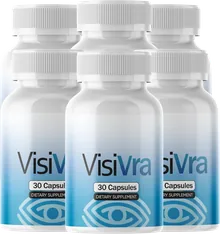
Best Visivra price today: 6 bottles at $49 each (save $780) or 3 bottles at $69 each with free US shipping. One-time payment, no autoship, 60 days to decide.
Check Today’s Discount ›Is there such a thing as too much?
Vitamin A and zinc have official upper limits (NIH ODS; NIH ODS). For lutein we couldn’t find one, and lutein has a good tolerability record. The known quirk is that very high intakes of carotenoids can tint the skin yellowish, which is harmless and fades. A more practical concern is overlap: a multivitamin plus an eye formula plus a separate lutein pill can stack up. Read more in lutein side effects.
Food or capsule?
Leafy greens, eggs, corn and orange peppers contain lutein, and the National Eye Institute recommends eating greens like spinach, kale and collards (NEI). Lutein is fat-soluble, so a salad with olive oil or eggs with spinach absorbs better than greens eaten dry. Many people don’t eat greens daily, though, and that’s where a capsule fills in. Our foods high in lutein list helps you judge how much you really get.
How to read the label
- Find the lutein line in the Supplement Facts panel. It should show milligrams, not just “proprietary blend.”
- Check zeaxanthin. The pair is usually sold together (why the pair matters).
- Look at the other nutrients. Vitamin A and zinc need to fit under NIH limits across everything you take.
- Note the serving size. Some products need two or three capsules to reach the stated amount.
Where Visivra fits
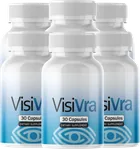
Visivra lists lutein and zeaxanthin among six ingredients, but the order page doesn’t publish the milligram amounts, so the only way to compare it with the 10 mg benchmark is to read the label on the bottle (Visivra dosage). We think that’s a fair criticism of the product. If you’d like to check it yourself, the 60-day guarantee gives you time (see the official offer; affiliate link).
A quick worked example
Suppose you eat a handful of spinach with eggs three times a week and nothing else particularly lutein-rich. You may be getting only a small fraction of a 10 mg daily target on most days, which is common. Now suppose the bottle you’re considering says “Lutein 10 mg, Zeaxanthin 2 mg per serving, serving size: 1 capsule.” That is simple to compare. If it says “Lutein 5 mg per 2 capsules,” the dose is half the benchmark, and you’d need to take twice as many to reach it. (These figures are illustrations, not a specific product.)
Common mistakes
- Taking it on an empty stomach. It absorbs better with fat in the meal.
- Judging it after two weeks. Macular pigment studies run for months (macular pigment).
- Ignoring the rest of the label. Zinc and vitamin A add up across products (NIH ODS; NIH ODS).
- Stacking products with the same carotenoids.
- Treating 10 mg as a prescription. It’s a trial benchmark for a specific population (NEI FAQ).
Questions
Does lutein dosage differ for men and women?
The research hasn’t set separate amounts for lutein, unlike vitamin A and zinc, which have different recommended intakes (NIH ODS; NIH ODS).
Should smokers take lutein?
Lutein and zeaxanthin replaced beta-carotene in AREDS2 partly because of lung-cancer concerns with high-dose beta-carotene in smokers (NEI). See Visivra for smokers.
What if a product lists “lutein esters”?
That is a common form of lutein used in supplements. The milligrams of lutein on the Supplement Facts panel are what count; if it’s unclear, ask the seller.
How long before it does anything?
Macular pigment builds slowly. Studies measuring it run for months, not days (macular pigment explained). If a product promises a difference in a week, be skeptical.
FAQ
How much lutein should I take daily?
The best-studied amount is 10 mg of lutein with 2 mg of zeaxanthin, the AREDS2 amounts. Ask your doctor if you have an eye condition.
Can you take too much lutein?
We found no official upper limit and it is well tolerated. Very high intakes can yellow the skin harmlessly. Watch totals of vitamin A and zinc in combination products.
Should I take lutein with food?
Yes. It is fat-soluble, so absorption is better with a meal that contains some fat.
Is 20 mg of lutein better than 10 mg?
Nothing we found shows that more is better for healthy adults. Stick to label doses and ask your doctor before going higher.
Sources
- National Eye Institute (NIH): AREDS/AREDS2 clinical trials
- PubMed: Lutein + zeaxanthin and omega-3 fatty acids for AMD, the AREDS2 randomized trial (JAMA, 2013)
- PubMed: Macular carotenoid supplementation improves visual performance, sleep quality and physical symptoms in people with high screen time (Foods, 2017)
- NIH Office of Dietary Supplements: Vitamin A and carotenoids
- NIH Office of Dietary Supplements: Zinc
- National Eye Institute (NIH): Keep your eyes healthy
- National Eye Institute (NIH): AREDS/AREDS2 frequently asked questions
General information, not medical advice. Prices and product details come from the official Visivra order page and bottle, checked November 6, 2026; the checkout page and the label on your bottle take priority. Read our disclaimer.