Why your eyes feel worst in January and in the office
Your tear film is a thin layer of water, oil and mucus that has to be replenished with every blink. Anything that speeds evaporation or slows blinking makes it break up. The National Eye Institute lists dry or windy air, lots of screen time and contact lens wear among the things that can bring on dry eye (NEI). Winter heating, summer air conditioning and car vents all do the same thing: move dry air across the eye.
The usual culprits
| Culprit | What to do |
|---|---|
| Heater or AC vent pointed at your face | Redirect it; at your desk, angle vents away or move your chair |
| Dry indoor air | Use a humidifier in the room where you spend the most time (AAO) |
| Fans and car vents | Aim them at your chest or the windshield, not your face |
| Screens | Blink on purpose; people blink only 5 to 7 times a minute on screens, instead of about 15 (AAO) |
| Contact lenses | Rewetting drops labeled for lenses; glasses in the evening (contact lens wearers) |
| Wind and cold outdoors | Wraparound sunglasses (sunglasses guide) |
| Some medicines | Ask your doctor or pharmacist; antihistamines and others can dry the eyes |
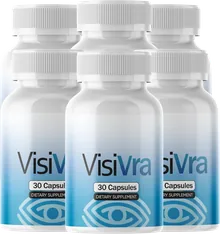
Best Visivra price today: 6 bottles at $49 each (save $780) or 3 bottles at $69 each with free US shipping. One-time payment, no autoship, 60 days to decide.
Check Today’s Discount ›A winter routine that takes two minutes
- Put a humidifier where you sit most, and clean it as directed.
- Check which way your vents blow.
- Keep preservative-free artificial tears on your desk.
- Set a reminder to look away and blink every 20 minutes (NEI).
- Drink water; it won’t cure dry eye but dehydration doesn’t help.
What about vitamins?
Vitamin A matters for the eye surface; deficiency causes dry eye, but it is rare in the US (NIH ODS). Omega-3 supplements are a popular suggestion, but the large NEI-funded DREAM trial found them no better than placebo for moderate to severe dry eye (NEI), so we wouldn’t rely on them. Read omega-3 for dry eyes and vitamins for dry eyes for the full picture.
Eye nutrients don’t replace the habits above. If your dryness comes with long, screen-heavy days and you want to add nutrition on top, a formula such as Visivra (affiliate link) includes vitamin A and lutein, but eyedrops and humidity will do more, faster (Visivra vs eye drops).
When it’s more than the weather
See an eye doctor if dryness lasts more than a couple of weeks despite these changes, or if you have pain, light sensitivity or blurred vision (NEI). Chronic dry eye has treatable causes, including eyelid gland problems and inflammation, and prescription options exist.
Where to put the humidifier
- In the room where you spend most of your time awake: the home office or living room.
- A few feet from your seat, not blowing directly at your face.
- A small hygrometer (humidity meter) is inexpensive and tells you whether the air is actually dry. Clean the humidifier as the maker says, since dirty ones can cause problems.
Travel and cars
- Redirect car vents toward your chest or the windshield.
- Keep drops in your bag for flights and long drives.
- Blink deliberately on long drives and screen sessions (AAO).
Questions
Do tinted lenses help dry eyes in wind?
Wraparound sunglasses cut wind and glare and can make outdoor days more comfortable (sunglasses guide).
Should I use drops before my eyes feel dry?
Using them at regular intervals during long screen sessions is reasonable, but if you need them constantly, see an eye doctor.
Is dry eye just part of getting older?
It’s more common with age, but it’s also treatable, so don’t just put up with it (NEI).
Small things people forget
- Avoid “get the red out” drops for everyday use.
- Don’t sleep with a fan blowing on your face.
- Take a break from contact lenses on bad days.
- Wash eyelids gently if they feel crusty; ask your doctor about lid care.
FAQ
Why are my eyes drier in winter?
Heated indoor air is dry, and cold wind outdoors adds to evaporation. Both make tears break up faster.
Does air conditioning cause dry eyes?
It can, because it dries and moves the air across your eyes. Redirect vents and use artificial tears if needed.
Do humidifiers help dry eyes?
They can, especially in a dry, warm room. The American Academy of Ophthalmology suggests one if you’re often in such a room.
When should I see a doctor about dry eyes?
If it lasts more than a couple of weeks despite changes, or comes with pain, light sensitivity or vision changes.
Sources
- National Eye Institute (NIH): Dry eye
- American Academy of Ophthalmology: Computers, digital devices and eye strain
- National Eye Institute (NIH): Keep your eyes healthy
- NIH Office of Dietary Supplements: Vitamin A and carotenoids
- National Eye Institute (NIH): Omega-3s from fish oil supplements no better than placebo for dry eye (DREAM trial, 2018)
General information, not medical advice. Prices and product details come from the official Visivra order page and bottle, checked November 6, 2026; the checkout page and the label on your bottle take priority. Read our disclaimer.